
Offering Illegal Sports Betting Nationwide
Prediction market platforms are offering illegal sports betting nationwide outside the state and tribal regulatory frameworks that protect consumers. They override voter decisions, bypass key consumer protections, ignore state and tribal laws, and avoid licensing and taxes.
State Gaming Tax Dollars Lost Since Prediction Markets Began Offering Sports Event Contracts:
$0
This is sports betting
without the rules.
Prediction markets are attempting to rebrand sports wagering as “futures contracts,” to avoid the longstanding state and tribal regulatory frameworks that govern legal sports betting.
By claiming oversight by the federal commodities regulator, these platforms are sidestepping strict state and tribal-mandated requirements.
Legal operators must comply with:
- Know-your-customer protocols
- Anti-money laundering safeguards
- Integrity monitoring requirements and accountability
- Responsible gaming requirements
- Age verification (21+ in most states)
- Local gaming requirements
Prediction markets operate without these.
Illegal Sports Event Contracts
Mislead Consumers

Prediction markets position sports event contracts as financial tools – but what they are called does not change the underlying activity. These platforms:
- Illegally allow wagers on sports
- Display “odds” that mirror sportsbook lines
- Pay out based off wins and losses
That’s a sports bet.

These platforms claim to be a fair “peer-to-peer” exchange, but your “peers” might not be who you think they are.
- The other side of these bets – and who’s providing much of the liquidity – are often professional trading firms or subsidiaries of the exchange. That’s a house.
- These platforms create, handle, and pay out bets in a closed loop system. That’s a sportsbook.

These platforms claim that this is “price discovery,” but, in contrast to true commodities markets, which process hard data like weather forecasts or exports, sports outcomes rely heavily on speculation.
- The “price discovery” seen in an illegal sports event contract is no different than the changing money line or spread at a sportsbook. Those are odds.
- There is no economic consequence from combining the outcome of a March Madness semifinal and the Yankees Opening Game score. That’s a parlay.
What the Data Shows
Framing Sports Wagering like Investing is Misleading Consumers
Framing sports wagering as an investment is harmful to consumers. Wagering on sports is not a financial strategy, and the gaming industry has long positioned it as a form of entertainment.
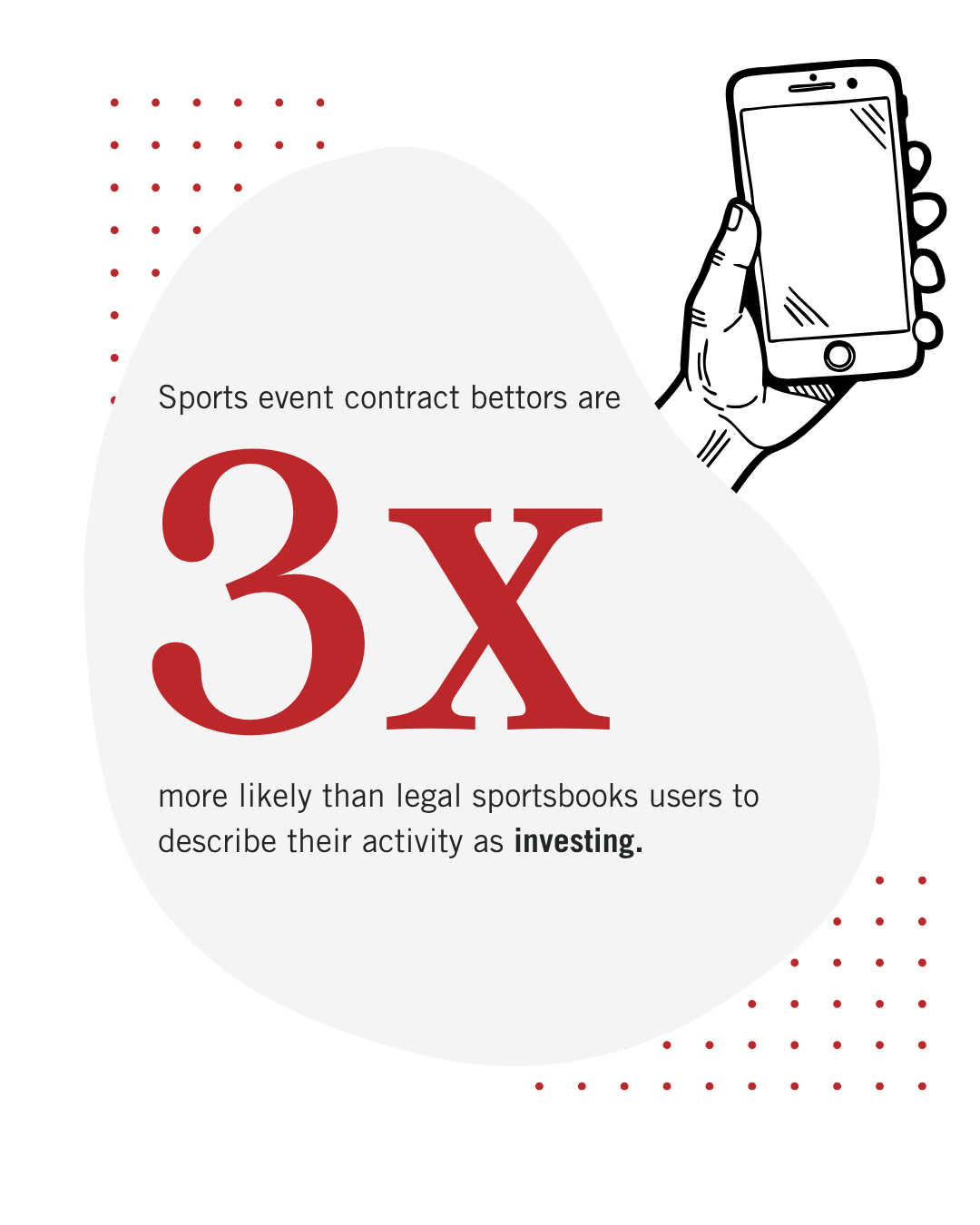
- Sports event contract bettors are 3x more likely than legal sportsbooks users to describe their activity as investing
- 25% of sports event contract users report funding activity from investment budgets.
BOTTOM LINE: These platforms are blurring the line between financial strategy and what is fundamentally gambling.
Consumers Expect Oversight That Doesn’t Exist
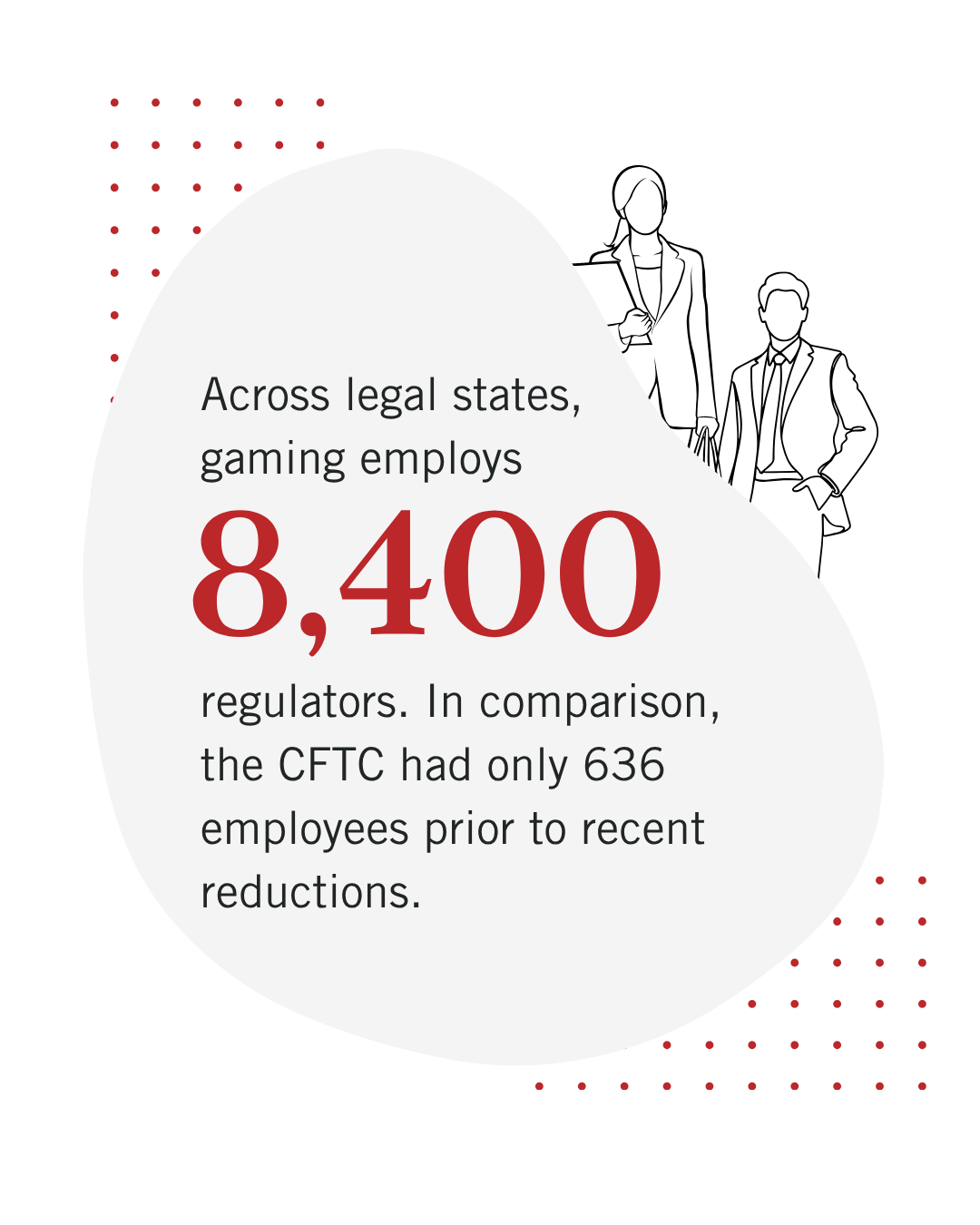
Prediction market platforms operate outside of state oversight, claiming federal oversight that is neither designed nor equipped to regulate sports wagering.
Public sentiment confirms this misalignment:
- 85% of Americans say sports event contracts are gambling, not financial instruments
- Nearly 80% of users believe state regulators could help resolve disputes on prediction markets
- 80% of users say sports event contracts should be regulated like other online sports betting
- 65% of bettors believe sports event contracts should be overseen by state and tribal gaming regulators – not the CFTC
BOTTOM LINE: The public sentiment is clear: consumers recognize this activity as sports betting and expect it to follow the same rules.
Prediction Market Advertising Has Surged and Does Not Include Responsible Gaming Safeguards
Legal sportsbook ad volume continues to decline, while prediction market ads have exploded – Kalshi is now the most visible sports betting brand by digital ad impressions.
What that means for consumers:
- In 2025: nearly 1 in 5 (15%) digital sports betting ads did not include responsible gaming messages.
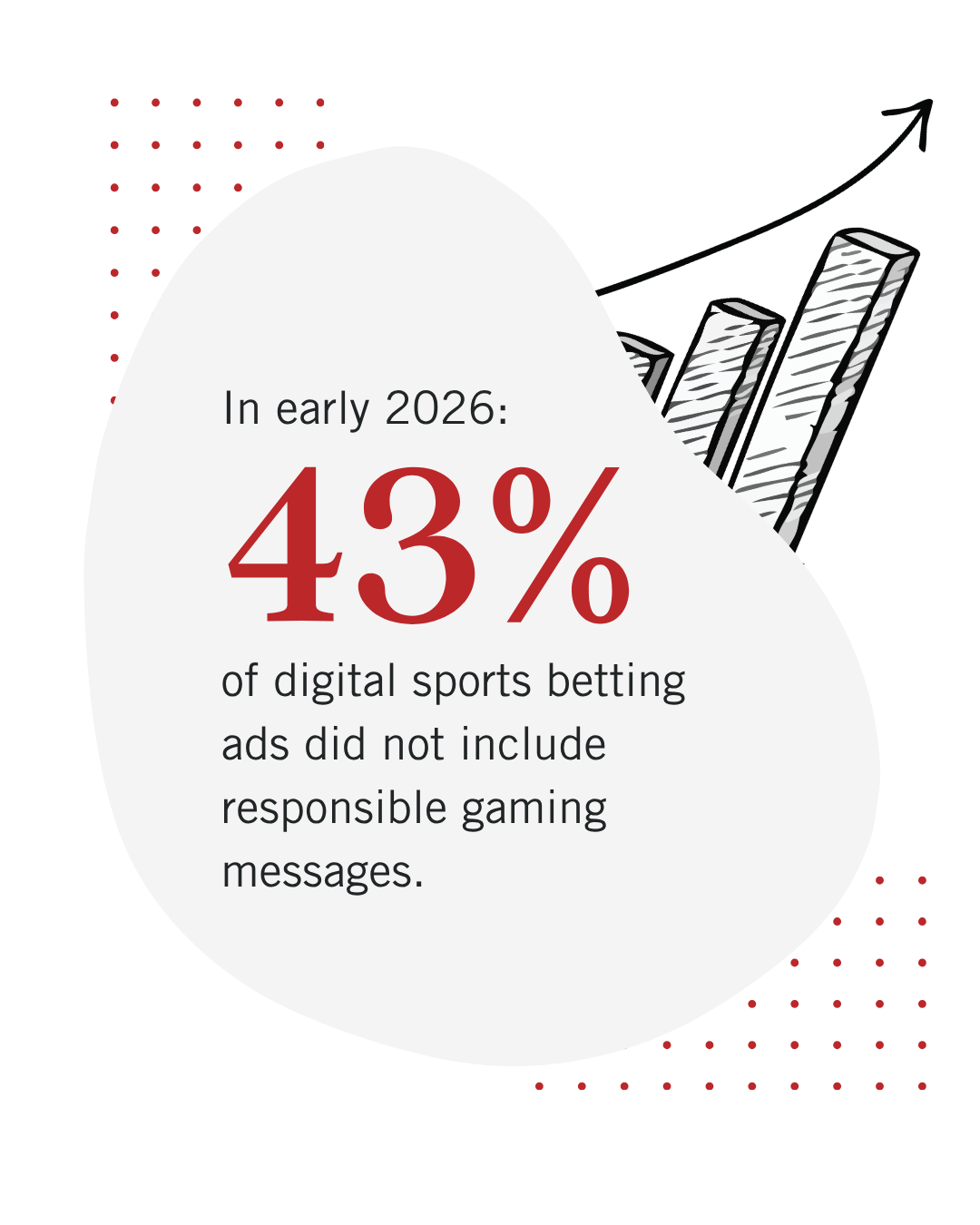
- In early 2026: nearly half (43%) of digital sports betting ads did not include responsible gaming messages.
BOTTOM LINE: As exposure increases, consumers are encountering sports betting-related advertising without the state-mandated responsible gaming safeguards required of legal sportsbooks.
Framing Sports Wagering like Investing is Misleading Consumers
Framing sports wagering as an investment is harmful to consumers. Wagering on sports is not a financial strategy, and the gaming industry has long positioned it as a form of entertainment.
- Sports event contract bettors are 3x more likely than legal sportsbooks users to describe their activity as investing
- 25% of sports event contract users report funding activity from investment budgets.
BOTTOM LINE: These platforms are blurring the line between financial strategy and what is fundamentally gambling.
Consumers Expect Oversight That Doesn’t Exist
Prediction market platforms operate outside of state oversight, claiming federal oversight that is neither designed nor equipped to regulate sports wagering.
Public sentiment confirms this misalignment:
- 85% of Americans say sports event contracts are gambling, not financial instruments
- Nearly 80% of users believe state regulators could help resolve disputes on prediction markets
- 80% of users say sports event contracts should be regulated like other online sports betting
- 65% of bettors believe sports event contracts should be overseen by state and tribal gaming regulators – not the CFTC
BOTTOM LINE: The public sentiment is clear: consumers recognize this activity as sports betting and expect it to follow the same rules.
Prediction Market Advertising Has Surged and Does Not Include Responsible Gaming Safeguards
Legal sportsbook ad volume continues to decline, while prediction market ads have exploded – Kalshi is now the most visible sports betting brand by digital ad impressions.
What that means for consumers:
- In 2025: nearly 1 in 5 (15%) digital sports betting ads did not include responsible gaming messages.
- In early 2026: nearly half (43%) of digital sports betting ads did not include responsible gaming messages.
BOTTOM LINE: As exposure increases, consumers are encountering sports betting-related advertising without the state-mandated responsible gaming safeguards required of legal sportsbooks.
What's at Stake
State + Tribal Authority
Consumer Protections
Community Investment
What They Don't Want You to See
Growing Scrutiny of Illegal Sports Event Contracts